Holding the Line: I Get Tied With a Little Help From My Friends
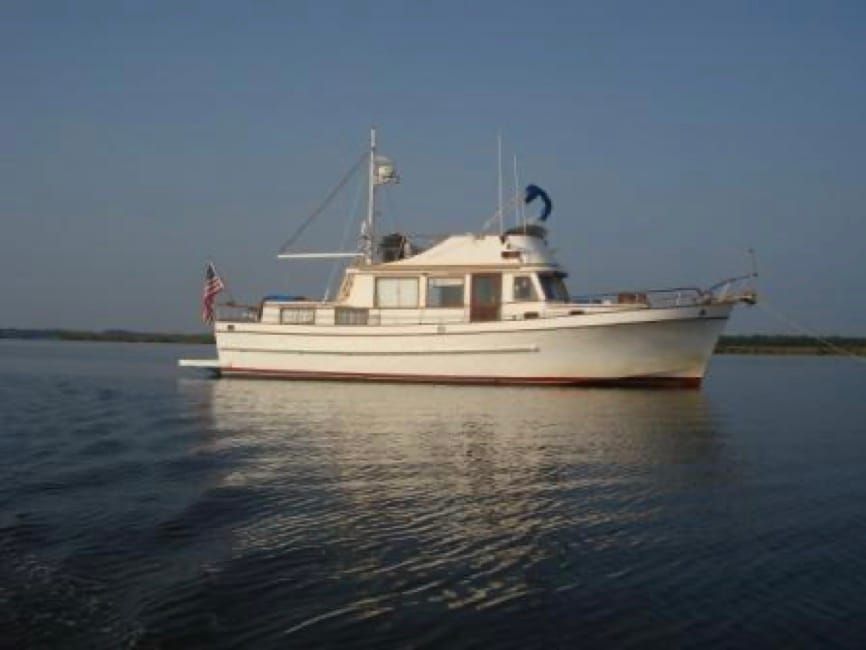
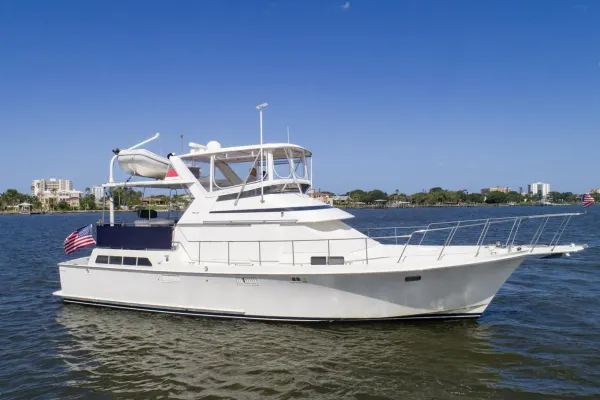
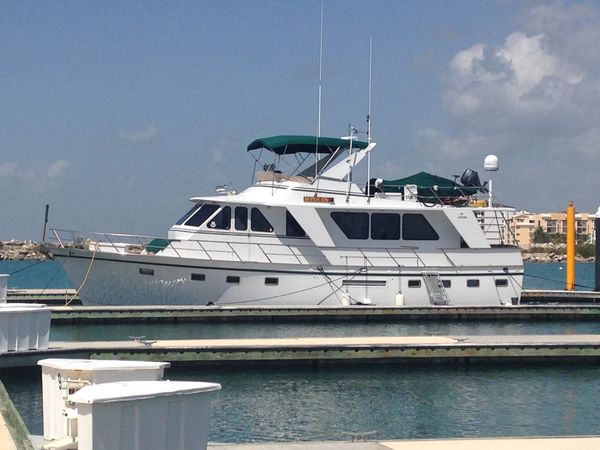
After college, I lived aboard a 44-foot 1981 Marine Trader named Aquila, a delightful pile of a boat. Most of the windows leaked, the topsides were extensively trimmed with neglected teak, and the pipes were sclerotic. But I loved it – she looked salty, was palatial for a single guy, and chugged comfortably wherever you pointed her.
I’d frequently take groups of friends for harbor cruises, usually to local destinations or just around the bay for an afternoon. While I found that getting underway was pretty straightforward – I’d moor bow-out for a quick getaway – returning to the pier was notably treacherous.
Maneuverability was a concern. Aquila was powered by a single 140 hp Ford Lehman diesel and a part-time bow thruster. The big teak-and-stainless wheel was casually connected to the rudder via a series of bike chains, sprockets, and shafts. None of these components felt particularly compelled to operate with precision or speed; in fact, there wasn’t even a rudder angle indicator, so applying throttle to observe the effect was the only way to narrow down where the rudder might be, short of diving in to check on it.
My slip was about midway down a long, narrow fairway with piers on either side. The pier opposite my slip was close enough that Aquila’s turning radius didn’t permit spinning around in the lane. The play - when the wind was from the South – was to put the boat perpendicular to the fairway and pier and drift sideways all the way down the aisle. As Aquila’s stern passed the bow of the boat just upwind of my spot, I’d shift into reverse. A protracted negotiation between various levers, rusty cables, and pulleys ensued, and eventually word would get to the Lehman’s transmission that an astern bell was desired. If the Lehman concurred - and sometimes he didn’t, a position he’d announce by stalling out near an expensive boat - we’d start backing into the slip.
As Aquila slid back, someone had to get a line around the slip’s outermost, upwind piling or the bow would keep moving north. Done correctly, you’d stand at the stern, get the line’s eye over the piling and walk forward as the boat backed in, keeping the boat tucked in as you went. This rarely happened.
Perhaps the least effective version of this maneuver occurred when one of my friends - who I had trained briefly but incoherently - tried to bear hug the piling as we slid by. He was a big guy - bigger than most - but after a few heroic seconds he had to let go, presumably to facilitate the subsequent abrupt and uninvited landing on the sailboat moored downwind.
One summer day I was assigned the task of entertaining some visiting Sailors from the British carrier HMS Ark Royal. They had been assigned the task of attending Norfolk’s Beer Fest, and by all measures, were exceeding the brief. My intent was to pick them up waterside, cruise the Elizabeth River to Hampton, and then let them enjoy a public concert in the small downtown. By the time I arrived in Norfolk, their condition was worthy of a sea shanty. As we steamed past the Ark Royal, they assembled on the starboard rail and offered a pale, lunar salute to the vessel that had borne them across the Atlantic.
At Hampton, our assigned berth was tight, between two boats and would require a shallow approach followed by an assertive backing bell. I assigned the least wobbly Brit to man the stern line with instructions to basically just get the line around something. The approach went well, and just as I was about to ask Lehman for some reverse, the Sailor fell overboard - near the propeller. I held neutral as we rolled towards the boat directly in front of us, and just before any backing would have come too late, a voice yelled, “He’s clear!” I reversed vigorously, somehow lines were passed, and we tied up neatly on the brick wharf. The Sailor, drenched but unfazed, climbed out of the harbor and motored off in search of refreshment.
Lines are considered a controllable force (as opposed to wind and current), but I’ve often found that not to be the case. What seems obvious from the flybridge may not be apparent on deck, and by the time you’ve determined that a forward-tending spring line would be really helpful right now to check sternway, a line-handling seminar conducted at full volume is ineffective and unpopular.
There’s a strategy to reduce the chaos. First, don’t expect your guests to become expert linehandlers in a day. In fact, if you’ve got a core crew that knows your boat and tie-up arrangement, I recommend you have everyone else simply stay out of the way, or give them simple tasks like rigging a fender or keeping children clear of the action.
Second, be prepared to go pierside before you commit to the approach. Fenders out, lines on deck (possibly made fast to the cleat they’ll be fastened to), bow hook in hand, pathways uncluttered and passengers secured. Check marina traffic for other outbound or inbound craft – it’s much easier to take a lap than it is to pass close aboard in confined quarters.
For the experienced crew, a quick discussion of winds, current, desired mooring position and particular challenges should orient the team. “We have strong offsetting winds today, so getting a line perpendicular to the pier quickly is critical.”
Speed deserves its own dissertation. Carry enough velocity that you manage the effects of wind and current, but not so much that you can’t arrest headway in approximately half the distance to the nearest hazard.
Lastly, do not encourage linehandler heroics to salvage a bad approach; the potential for injury is significant. While nobody likes being the afternoon’s dockside entertainment, if you need to back out and try again, do it. Anyone who’s spent real time on the water has had a rough landing – and anyway, they make for good sea stories.